/02%20Common%20Resources/Logos/Header%20Logo-cropped.svg)
.png?width=301&height=187&name=Website%20Navigation%20Images%20(3).png)
-1.jpg?width=1984&height=1196&name=UFIT%20Club%20Street%20Front%20(4)-1.jpg)

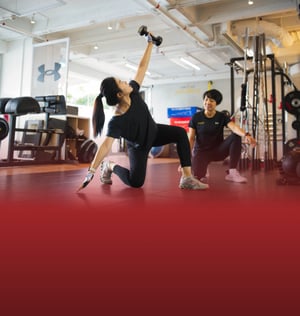


Singapore's work culture doesn't make it easy to keep moving. Long hours at a desk, back-to-back video calls, and the near-constant pull of a phone screen mean most people spend the majority of their day locked into the same position, often without realising it.
Contrary to what many people think, posture training is less about holding the ‘right’ position and more about how well your body handles the positions you're in all day. The real culprit is staying in one position for too long, which leads to stiffness, fatigue and discomfort over time. The exercises here aren't about achieving perfect alignment, but building the strength and resilience to cope with the sustained demands of desk work and screen time.
Why Does Posture Matter?
The goal isn't to hold a perfect position all day, but to avoid staying stuck in the same one. When you remain in any fixed position for too long, specific muscles and joints bear a sustained load without relief. Tissues that don't get a break start to protest.
Regularly shifting how you sit, stand and move distributes that load more evenly across your body. It keeps muscles from locking up, reduces the cumulative strain on joints and helps you stay more comfortable through a long workday.
Why Do We Get Stiff and Sore?
Discomfort isn't usually the result of a ‘wrong’ position. It tends to come down to a handful of common factors:
- Sedentary work habits: Hours spent hunched over a laptop or craning toward a phone screen can gradually pull the body out of alignment.
- Muscle weakness and imbalance: When the anterior and posterior chains are out of balance, the body can't maintain a strong, neutral frame.
- Being overweight: Excess weight places additional strain on the spine and joints, often forcing compensatory postures.
- Poor sleep support: A low-quality mattress or poor sleeping position can affect spinal curvature overnight.
- Inappropriate footwear: Worn-out soles or high heels alter pelvic tilt and gait in ways that travel upward through the entire kinetic chain.
- Previous injuries: Untreated trauma or old injuries often cause the body to adopt protective, misaligned positions that become ingrained over time.
What Are the Signs of Bad Posture?
These aren't necessarily signs that you're holding yourself wrong, but signals that your body has been in the same position for too long:
- Physical signs, such as forward head posture, rounded shoulders, a protruding belly or an exaggerated spinal curve
- Persistent pain or discomfort, particularly in the neck and back
- Muscle fatigue causing you to feel tired after activities that shouldn't be demanding
- Reduced mobility, such as stiffness or restricted movement in the spine, hips and shoulders
- Breathing issues caused by a collapsed chest that limits lung expansion
- Digestive discomfort, where sustained slouching compresses the abdominal cavity
If several of these sound familiar, it's worth looking into how to improve your posture. This should be taken not just as a habit to correct, but a physical pattern that responds to structured intervention.
Can Strength Training Improve Posture?
Yes, and it's one of the most effective tools available. Strength training for posture works by targeting the muscle imbalances that allow poor alignment to persist. Specifically, posture exercises that strengthen the posterior chain counteract the forward pull created by prolonged sitting and screen use, drawing the body back into a neutral line.
Core strengthening plays an equally important role. A strong core supports the spine and reduces the load on passive structures such as ligaments and discs. Together, these effects make exercises to improve posture both preventive and corrective.
How to Improve Posture Through Strength Training
These five exercises to improve posture target the muscle groups most commonly involved in postural dysfunction.
1. The Plank
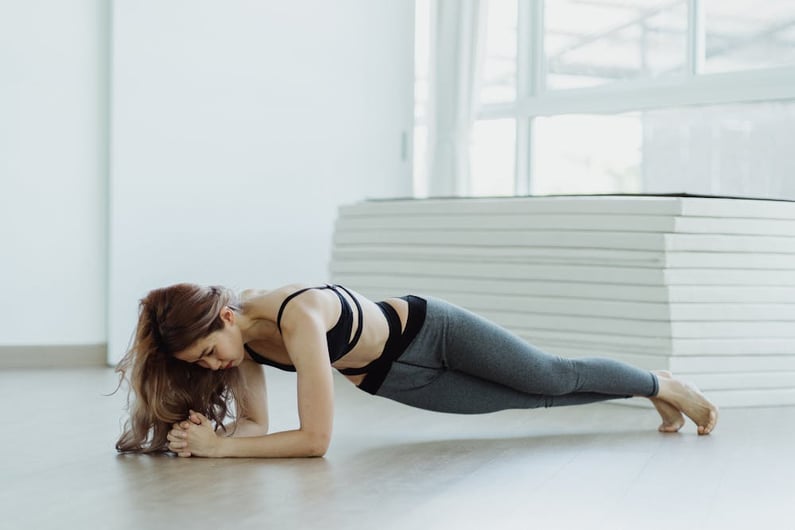
Hold a forearm plank with a straight line from head to heels, engaging the glutes and core to prevent the hips from sagging or hiking upward. This is one of the foundational core exercises that reinforces the deep stabilisers needed for a neutral spine.
2. Glute Bridges
Lie on your back with knees bent, press through the heels to lift the hips, and squeeze the glutes firmly at the top to encourage proper pelvic alignment. This exercise targets the glutes, a key mover of the hip and stabiliser in supporting the lower back.
3. Bent-Over Rows
Hinge at the hips with a weight in each hand, pulling toward the waist while drawing the shoulder blades together at the top of the movement. This strengthens the rhomboids and lats, which are the muscles most responsible for counteracting rounded shoulders and a hunched back.
4. Dead Bug
Lie on your back and slowly lower the opposite arm and leg simultaneously, keeping the lower back firmly pressed against the floor. This anti-extension movement trains the core to stabilise the spine while the limbs are in motion.
5. Wall Angels
Stand with your back, head and elbows against a wall, then slide your arms up and down in a goalpost motion. This movement opens the chest and actively engages the scapular stabilisers during the overhead movement of the shoulder.
Consistent posture training transforms more than physical alignment: it improves energy, reduces pain, and builds physical confidence that carries into daily life. Home exercises are a solid starting point: if you spend most of your day in front of a desk, pairing these with effective movement and stretching strategies for desk workers can accelerate your progress.
How to Improve Posture Through Reformer Pilates
Reformer Pilates is a low-impact training method that builds the strength, mobility and stability your body needs to handle sustained positions throughout the day. The spring-based resistance allows you to work through a full range of motion with controlled load, making it accessible regardless of starting point. Its exercises consistently target deep core activation, hip stability and scapular control.
Our Foundation Programme and Pre & Post Natal Programme at UFIT combine reformer Pilates with personal training for a comprehensive approach to strength, mobility and stability.
Achieve Structural Balance with UFIT
A personalised assessment is the most reliable way to identify your muscle imbalances and build a programme that addresses them. UFIT's personal fitness instructors carry out movement screens with clients at the start of their programmes, as well as use data from their Physical Performance Screens to design programmes for structural balance that are grounded in your lifestyle, goals and movement patterns.
For those dealing with chronic spinal issues or persistent discomfort, our integrated approach means access to physiotherapy in Singapore alongside fitness coaching and other allied health professionals. With specialists across physiotherapy, osteopathy, and massage working collaboratively through UFIT's Circle of Care, your goals and our expertise come together in one shared plan. Book an appointment with us and take the first step toward better posture and improved health today.