
/02%20Common%20Resources/Logos/Header%20Logo-cropped.svg)

.png?width=301&height=187&name=Website%20Navigation%20Images%20(3).png)

-1.jpg?width=1984&height=1196&name=UFIT%20Club%20Street%20Front%20(4)-1.jpg)





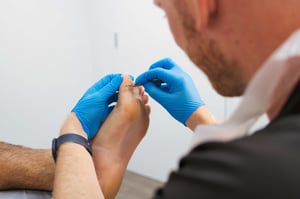
Most people have dealt with a hard patch of skin on their foot at some point. These hard patches, known as corns and calluses, are so common that many of us brush them off as nothing more than an everyday annoyance.
Some people ignore them and hope they disappear on their own. Some people attempt to trim or file the skin themselves, but this can lead to irritation or small cuts especially if the underlying cause has not been addressed.
But when that thickened skin turns painful or keeps coming back, it’s a sign to get it checked. At UFIT Podiatry, our podiatrists not only remove corns and calluses safely but also use standing pressure scans, Zebris pressure-treadmill analysis, and high-speed motion-capture gait assessment to pinpoint what’s causing them so they don’t return.
What Causes Corns and Calluses On Your Foot?
Before diving into treatment options, let’s clarify the differences between these two common skin complaints. First, let’s dive into what a callus is.
A callus is a wide patch of thickened skin that usually forms on your soles or heels. It builds up slowly from repeated friction or pressure and is generally painless, acting more as a protective layer.
Corns are different. They are smaller, more focused spots of hard skin with a firm central core. Because that core presses on the deeper layers of skin, corns can feel sharp and painful, especially when you walk.
Common Causes of Corns and Calluses
Corns and calluses form where your feet experience repeated friction or pressure. The main culprits include:
- Ill-fitting Shoes: Shoes that are too tight, narrow, shallow, or unsupportive put extra pressure on certain spots. High heels push your toes into unnatural positions, causing corns, while shoes that rub on the soles or heels lead to calluses.
- Altered Foot Mechanics: How your foot moves when you walk affects where pressure builds up. Overpronation, high arches, flat feet, or an unusual gait can concentrate weight on specific areas, leading to localised areas of hyperkeratosis (thickened skin)
- Occupation and Activity: Activities involving repetitive loading such as prolonged standing, running, or dancing—can increase shear forces and pressure at specific points on the foot. Repetitive stress makes corns and calluses more likely to develop.
Can You Treat Corns and Calluses Yourself at Home?
Whether you can treat corns and calluses yourself depends on how severe they are and your overall foot health.
Mild Cases: Proceed with Caution
For mild cases, such as a small, mostly painless callus, gentle at-home care can provide temporary relief. Soak your feet in warm water to soften the skin, then carefully use a pumice stone or foot file to reduce thickness.
Keep in mind that home care only addresses the surface. It does not fix the underlying cause, like how your shoe fits or the way your foot moves. Once the friction continues, the corn or callus is likely to return.
Persistent or Painful Cases: Seek Professional help from a Podiatrist
When a corn or callus is persistent, very painful, or growing quickly, you should avoid DIY removal. Dangerous attempts usually involve cutting or aggressively scraping the hardened skin with sharp objects. This can easily damage healthy skin, introduce bacteria, and cause a severe infection.
Medicated corn plasters containing salicylic acid can also be risky. While they may dissolve the callus on your foot, they lack the precision of professional tools and can burn or damage surrounding healthy skin, worsening the problem.
For people with underlying health issues such as diabetes, peripheral neuropathy, or poor circulation, any break in the skin can be extremely dangerous. In individuals with diabetes, neuropathy, or poor circulation, even a small break in the skin can increase the risk of infection or ulceration. If this applies to you, you should never attempt to get rid of corns or calluses yourself.
So, in such cases, how do you remove a corn on your foot? The bottom line is simple. On the whole, home care can only provide temporary relief. If corns or calluses on your feet keep coming back or become genuinely painful, professional podiatry services are the best way to treat them safely and address the root cause for long-term results.
When to See a Podiatrist For Foot Corn or Callus Removal?
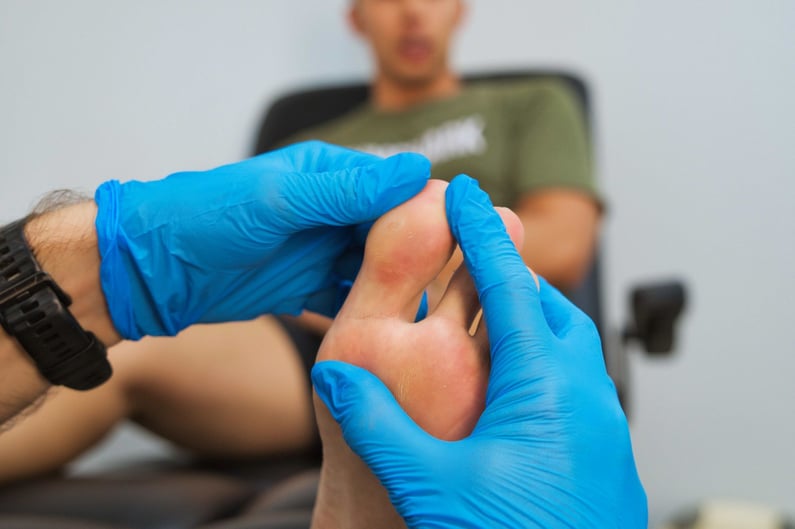
Knowing when to move from DIY care to professional help is important for both comfort and foot health. You should see a podiatrist right away if you notice any of the following:
- Persistent Pain or Recurrence: If the corn or callus causes ongoing pain that affects daily activities, or if it recurs shortly after you try to file it down, it is time for professional help. This usually means the pressure point on your foot is significant and needs a proper mechanical solution.
- Signs of Infection: Redness, swelling, warmth, or discharge around the area are warning signs and require prompt professional attention.
- Underlying Foot Deformities: If the corn or callus is linked to a structural issue, such as bunions, hammertoes, toe deformities, or bone spurs, simple surface removal is not enough. A podiatrist can evaluate the problem and provide safe foot corn removal and callus treatment, addressing the friction and preventing recurrence.
How a Podiatrist Treats Corns and Calluses
1. Professional Debridement
Podiatrists use sterile, professional tools to carefully reduce thickened skin. This precise method removes the painful core or thickest layer of the callus without harming healthy tissue. The process is typically painless and significantly more precise than at-home methods.
2. Pressure Relief and Padding
After reducing the skin, the podiatrist protects the area while it heals. This can include felt or foam padding, silicone sleeves, or custom toe separators. These devices reduce friction and redistribute pressure, giving the skin a chance to recover.
3. Prevention and Root Cause Correction
The best way to stop corns and calluses from coming back is to tackle the underlying cause of corns and calluses on your foot. A podiatrist will check your gait, examine your footwear, and look for any biomechanical imbalances. Based on what they find, they may recommend:
- Custom Insoles (Orthotics): Prescription insoles designed to your feet to improve alignment, evenly distribute weight, and reduce high-pressure areas.
- Footwear Advice: Guidance on the right type, shape, and size of shoes to support your foot structure and minimise friction.
- Minor Procedures: In severe cases, if a bone prominence or toe deformity contributes to recurrent hard skin, your podiatrist may recommend further assessment, imaging, or referral to an orthopaedic specialist if needed.
Take the Next Step for Healthy Feet
If you are tired of the cycle of filing, soaking, and recurring pain, or if you have any concerns about the health of your feet, don’t wait for a minor nuisance to become a bigger problem.
UFIT Podiatry offers safe, effective solutions that target the root cause of corns and calluses. Our dedicated podiatrists provide personalised care to relieve discomfort and prevent future issues. UFIT Podiatry combines clinical expertise with advanced pressure-mapping technology and biomechanical assessment to deliver long-lasting relief from corns and calluses.
Book a consultation today and experience professional podiatry services at UFIT designed to keep your feet comfortable, healthy, and pain-free.